

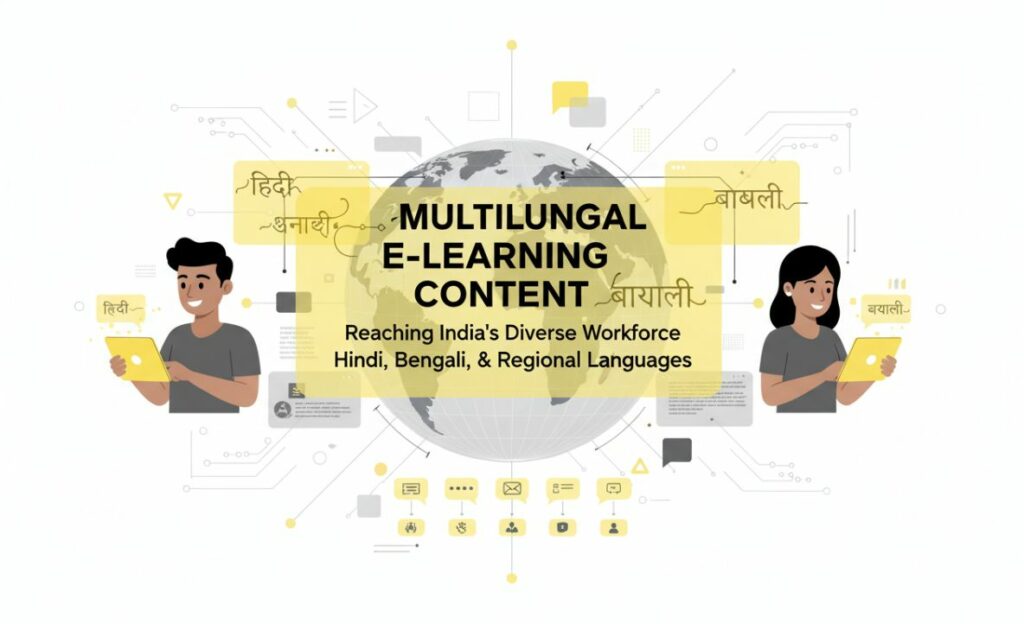
Here’s a critical insight many Indian organizations miss: 55% of India’s workforce—approximately 300 million people—prefer learning in regional languages rather than English. Yet, most corporate training is delivered exclusively in English, creating an enormous engagement and accessibility gap.
India has 22 officially recognized languages plus hundreds of dialects. Hindi is the mother tongue of 43% of Indians; Bengali accounts for 10%; followed by Telugu, Marathi, Tamil, and others. When organizations deliver training only in English, they effectively exclude hundreds of millions of potential learners while dramatically limiting engagement among those who do attempt English-language content.
The numbers are staggering: Companies implementing multilingual training across India report 67% higher engagement rates, 45% better knowledge retention, and 52% higher course completion rates among regional language learners compared to English-only counterparts.
For pan-India enterprises, multinational corporations operating across India, and organizations with frontline workforces spanning diverse regions, multilingual e-learning isn’t a nice-to-have feature—it’s competitive necessity.
The Business Case: Why Multilingual E-Learning Matters
1. Dramatically Expanded Reach and Accessibility
Most Indian employees don’t speak English fluently outside professional contexts. When training is English-only, employees struggle to concentrate on content while simultaneously translating language in their minds. Comprehension suffers; retention plummets.
Regional language training removes this cognitive load. Learners engage with content in their native language, understanding complex concepts rather than wrestling with unfamiliar terminology. The result: broader participation, better learning outcomes, and training that actually reaches your entire workforce rather than English-proficient segments.
2. Significantly Improved Learning Outcomes
Research on multilingual learning is unequivocal: people learn better in their first language. Retention improves 35-45% when content is in the learner’s native language. For critical knowledge—safety protocols, compliance requirements, technical procedures—this improvement directly impacts performance and risk reduction.
3. Enhanced Employee Satisfaction and Inclusion
Providing training in employees’ native language sends a powerful message: “Your language, culture, and accessibility matter to us.” This drives employee satisfaction, belonging, and organizational commitment. Indian companies prioritizing multilingual training report 38% higher employee engagement scores and measurably improved retention, particularly among frontline workers.
4. Compliance and Risk Reduction
In manufacturing, pharmaceuticals, and BFSI sectors, regulatory compliance training must ensure genuine understanding across all employees. When a frontline worker misunderstands a safety protocol because it was explained in non-native English, consequences can be severe. Multilingual compliance training ensures clear, unambiguous communication of critical safety and regulatory requirements across your entire workforce.
5. Competitive Advantage in Talent Attraction and Retention
Forward-thinking organizations offering multilingual training attract talent from broader geographic regions and socioeconomic backgrounds. For manufacturing and operations-heavy companies, this access to wider talent pools significantly improves recruitment and reduces hiring costs.
The Challenge: Effective Multilingual Content Development
Creating truly effective multilingual e-learning is more complex than simple translation. Poor multilingual implementation can backfire, creating content that is technically translated but culturally inappropriate, contextually irrelevant, or linguistically awkward.
Translation vs. Localization: A Critical Distinction
Translation converts English text into regional languages word-for-word. This approach often produces awkward, confusing content that learners find frustrating.
Localization adapts content for regional languages while considering cultural context, local examples, regional regulatory requirements, and cultural norms. A localized module about customer service excellence in Hindi won’t just translate English examples—it will include examples resonating with Hindi-speaking employees’ work experiences and cultural values.
Effective multilingual e-learning requires localization, not mere translation.
Key Challenges in Multilingual E-Learning:
1. Linguistic Complexity: Hindi, Bengali, and other Indian languages have grammatical structures fundamentally different from English. Direct translation often produces incomprehensible results. Professional linguists familiar with technical terminology are essential.
2. Cultural Adaptation: A safety training scenario perfectly suitable for English-speaking urban professionals may need significant cultural adaptation for regional language learners in different geographic contexts.
3. Visual and Symbolic Considerations: Icons, images, and symbols carrying specific meanings in one culture may confuse or offend in another. Effective localization reviews all visual elements for cultural appropriateness.
4. Maintenance and Version Control: Managing content in multiple languages creates complexity—when English content updates, all translated versions must update simultaneously. Efficient processes and robust content management systems are essential.
5. Quality Assurance: Native speakers fluent in both the language and the subject matter must review all content to ensure linguistic accuracy, cultural appropriateness, and technical correctness.
Implementation Strategy: Building Effective Multilingual E-Learning
Phase 1: Strategic Language Selection
Start by identifying which languages reach the highest percentage of your target workforce:
- Hindi: Prioritize if targeting pan-India reach. Hindi speakers represent 43% of India’s population and span diverse regions.
- Bengali: Essential for Eastern India operations (10% population, concentrated in West Bengal, Assam, Jharkhand)
- Telugu: Critical for Southern operations and tech hubs (8% population, strong in Telangana, Andhra Pradesh)
- Marathi: Important for Western India, especially Maharashtra operations (7% population)
- Tamil: Essential for Tamil Nadu and Southern operations (6% population)
- Other Regional Languages: Based on your specific geographic footprint and workforce distribution
Don’t attempt to translate into all 22 official languages immediately. Start strategically with languages covering 80% of your workforce.
Phase 2: Professional Content Localization
Partner with professional localization providers specializing in corporate e-learning:
Step 1: Subject Matter Expert Review
Your internal SME and the localization team collaborate to identify culture-specific examples, locally relevant scenarios, and region-specific regulatory or procedural requirements to incorporate into regional language content.
Step 2: Professional Translation by Specialists
Never use machine translation alone. Hire native speakers with subject matter expertise in your industry to translate content. A translator familiar with pharmaceutical protocols will produce superior pharmaceutical training translations compared to a generic translator.
Step 3: Cultural Review
Have culturally knowledgeable reviewers examine all content for appropriateness, relevance, and cultural sensitivity. They’ll identify and suggest alternatives to examples, metaphors, or scenarios that might confuse or offend.
Step 4: Quality Assurance Testing
Native speakers unfamiliar with the original English content review translated content to verify clarity, appropriate terminology, and overall comprehensibility. If native speakers unfamiliar with the content understand it, translation quality is confirmed.
Step 5: Learner Testing
Conduct pilot testing with actual learners from your target region before full rollout. Their feedback on clarity, relevance, and comprehensibility informs final refinements.
Phase 3: Leveraging Technology for Scalability
Modern LMS platforms support multilingual content management:
- Centralized content management: Manage English master content centrally; translations branch from this source, reducing duplication and version control issues.
- Automatic language detection: Platforms can detect user language preferences and automatically serve appropriate language versions.
- Multilingual assessment: Assessments automatically appear in learner’s language preference, ensuring comprehension while maintaining scoring standardization.
- Reporting and analytics: Track learning metrics by language, identifying whether particular language cohorts struggle with specific content—informing targeted improvements.
Phase 4: Continuous Improvement
Monitor learner feedback and performance by language:
- Which language learners complete courses fastest? Why?
- Where do learners across all languages struggle most?
- Are any language groups underperforming? Why?
- How do learner satisfaction scores vary by language?
Use this intelligence to continuously refine translations, update cultural examples, and improve overall content quality.
Real-World Success: Multilingual E-Learning Impact
A manufacturing company with operations across India implemented multilingual safety training in Hindi, Telugu, and Tamil. Results: safety incident rates decreased 31% in the first year; course completion rates jumped from 48% (English-only) to 82% across all language groups; and employee satisfaction with training increased from 3.1/5 to 4.4/5. Most significantly, near-miss reporting increased (indicating employees now understood procedures well enough to recognize and report safety issues), a leading indicator of superior safety culture.
An IT services company delivering multilingual upskilling to BPO employees saw 58% higher course completion rates and 44% better assessment scores when training was offered in regional languages compared to English-only options. Employees rated the training significantly more relevant and valuable.
Key Metrics: Measuring Multilingual E-Learning Success
Track these metrics to assess multilingual program effectiveness:
| Metric | Baseline (English-only) | Target (Multilingual) | Impact |
| Course Completion Rate | 48-55% | 70-85% | 35-50% improvement |
| Assessment Scores | 62-68% | 78-88% | 20-26% improvement |
| Knowledge Retention (30-day) | 55% | 75-80% | 25-35% improvement |
| Employee Satisfaction | 3.2/5 | 4.2-4.6/5 | 30-44% improvement |
| Time-to-Competency | 8-10 weeks | 5-7 weeks | 30-40% acceleration |
Conclusion: Multilingual as Standard Operating Procedure
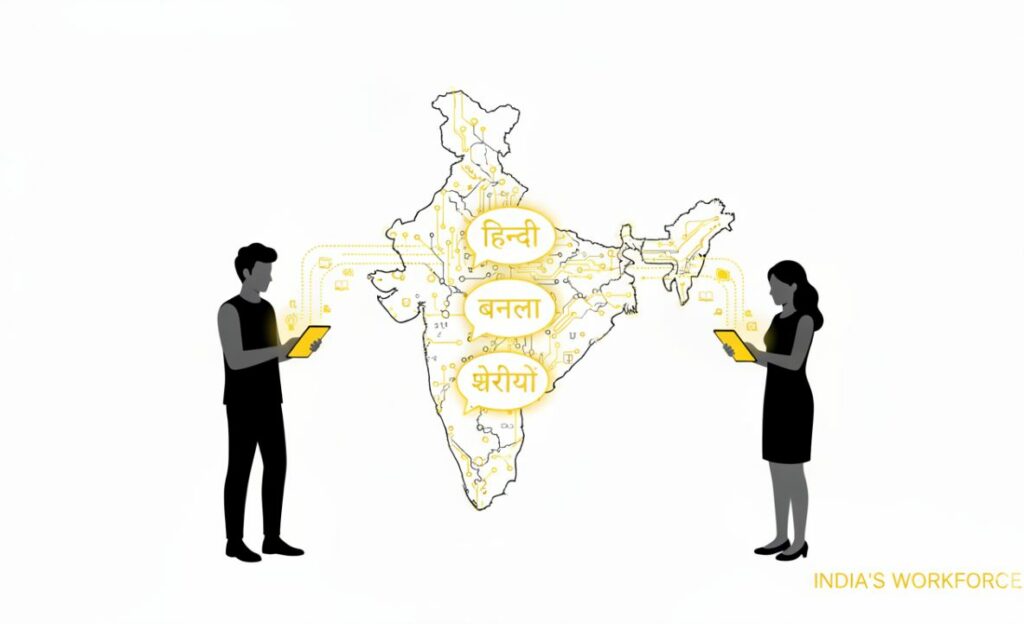
India’s workforce is multilingual. Organizations delivering English-only training are leaving enormous potential on the table—both in terms of learner reach and learning effectiveness. The companies leading your industries already recognize this and are investing in multilingual e-learning.
Multilingual training isn’t complexity for complexity’s sake. It’s strategic investment in accessibility, learning effectiveness, and inclusion. For Indian organizations operating across multiple regions, serving diverse workforce demographics, or competing for talent, multilingual e-learning represents competitive advantage and operational excellence.
The question is no longer whether to offer multilingual training, but how quickly you can transition from English-only to a strategically multilingual approach that serves your entire workforce effectively.
Ready to unlock the potential of India’s regional language learners? Garage Productions specializes in multilingual content development and localization for corporate e-learning. We work with professional linguists, cultural experts, and your subject matter specialists to create genuinely localized content that resonates with learners across India’s diverse regions. Let’s discuss how multilingual e-learning can expand your reach, improve your learning outcomes, and demonstrate organizational commitment to inclusion and accessibility.